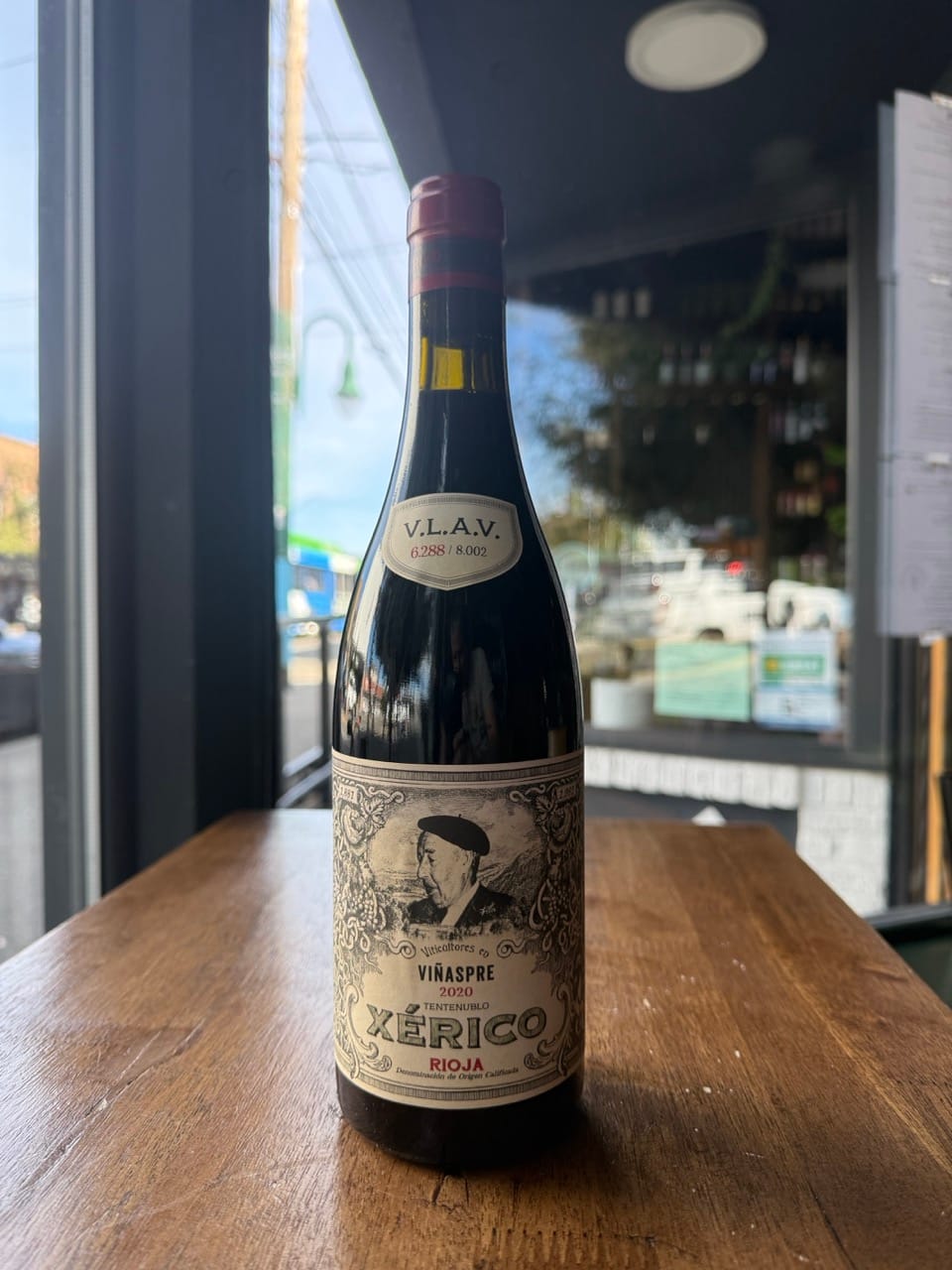
Tentenublo, Xérico - 2020
Fast Facts:
Winemaker(s): Roberto Oliván
Region: Viñaspre → Rioja Alavesa → Rioja → Spain
Classification: DOCa Rioja
Varietal(s): Tempranillo, Viura
Terroir: White chalky clay, ~2K ft. Mediterranean heat, cold mountain wind
Serving Temp: 55-60°F
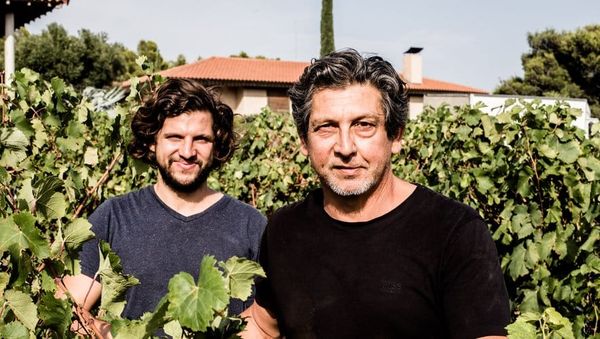
Roberto Oliván was eighteen when he took over the vines from his mother and uncle in Viñaspre, a tiny hamlet in the Basque corner of Rioja where about thirty people spend the winter. He farmed on the weekends and sold the grapes to wineries nearby until 2010, when the wineries buying his grapes cut their rate in half, landing less than what it cost him to grow the fruit. Roberto rented a stall in an old cooperative and made 3,500 bottles, just to see what would happen. He called the label Tentenublo, "hold off, storm cloud," after the church bells that villages along the Ebro River rang to scare away hail.
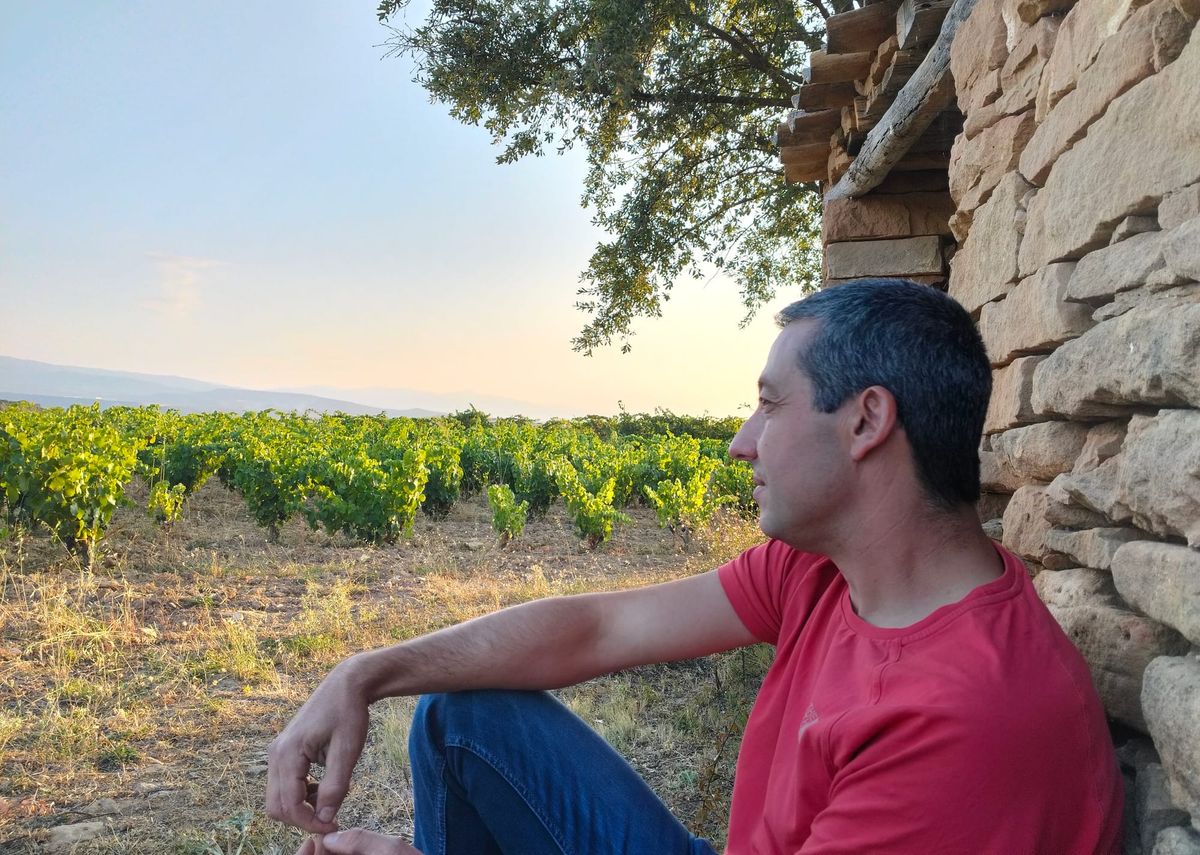
Today he farms about 25 acres split into thirty parcels, some under a quarter acre, and sorts them by the color of the dirt. Red sandstone goes into one wine. The white ground, chalky clay on eroded slopes 1,800 to 2,300 feet up, goes into this one. "Xérico" is a soil scientist's word for earth that stays dry all summer, and Roberto appropriately trained as an agronomist before he trained as a winemaker. The hot Mediterranean air settles on the low end of the village while the high end takes cold wind off the mountains, so the grapes ripen slowly without going soft.
The wine is primarily Tempranillo with about 15 percent Viura, a white grape, fermented together, as growers here have long done. Some bunches go in stems and all, and everything happens in concrete tanks. In fact, it's the only wine in the cellar that never touches a barrel. In Roberto's words, concrete takes an X-ray of a wine: fixing the fruit in place, keeping it young. His word for this bottle is cosechero, the Rioja term for a grower who bottles his own harvest. It's the leap he made in 2010, memorialized here.
Why'd we pick it?
If asked which wine he'd keep if he could only make one, he'd say this one. And take a look at that label! Every vintage of Xérico carries a photo of someone in Roberto's family, from his grandfather Félix to his daughter. Roberto says the wine stands for a single year of his family's work, and then he catches himself: "A year! So quick to say."
The tag on the neck numbers your bottle out of 8,002. The V.L.A.V. above it is Roberto getting creative. Rioja has an official village designation a winery can add to its label, but only if the cellar sits in that village. His vines are in Viñaspre and his cellar is about a mile down the road in the next town, so he doesn't qualify. V.L.A.V. stands for "free vineyards of the hamlet of Viñaspre," and it gets the name on the bottle anyway.
Field Notes
- Tastes like: Dark cherry and raspberry, bay leaf, a little smoke and leather, chalky texture and dusty grip on the finish.
- Drink it: If you have a wine cellar, store it in there. If you don't, leave it at room temperature, with a tiny stint in the fridge to take the edge off. Decant it slowly with any sort of vessel you like. And stop right when you see sediment.
- Food Pairings: Lamb chops with plenty of salt, off the grill if you're grillin'. Or a hot pan. A simple base dish of lentils simmered with carrots, onion, and a bay leaf, finished with good olive oil and a splash of red wine vin. And if you can get your hands on Idiazabal, the lightly smoked sheep's milk cheese from the Basque Country, just slice and eat. Bam!